
Basement Waterproofing in Toronto: Interior Drain, Sump Pump, and Weeping Tile System Behind a New Slab
In Part 1, we walked through a real East End Toronto basement where a “simple” concrete floor replacement in Toronto almost turned into a structural project. The ceiling height looked decent in the middle, but once we broke concrete at the corners and shot elevations with a laser, we found uneven footings. The differences were enough that pouring a perfectly level new slab without addressing the footings would have reduced headroom instead of gaining it. That is the point where a job can shift from concrete floor replacement and basement waterproofing in Toronto into a whole basement foundation replacement scope, meaning bench footing or underpinning, permits, engineering, and a bigger plan. The takeaway was simple: you cannot price or promise basement lowering correctly until you know what is happening under the slab.
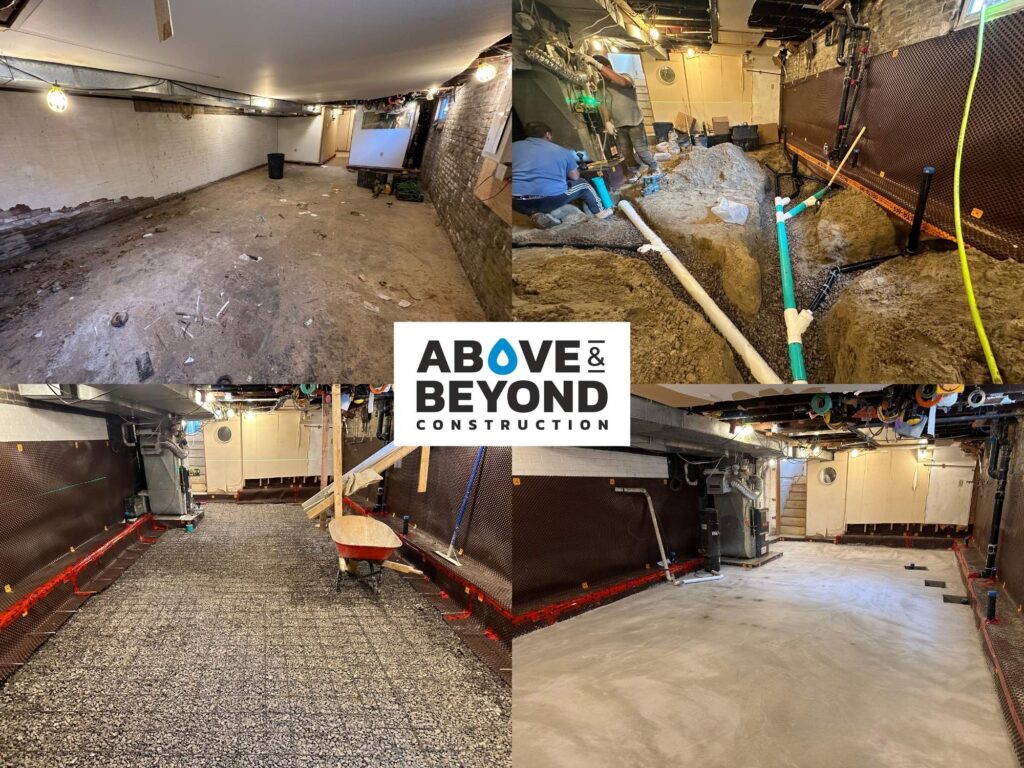
This is where most homeowners realize the job was never only about concrete. If you are opening the floor, you have a rare chance to do basement waterproofing in Toronto properly, from the inside out, with full access to the perimeter and drainage pathways.
Most calls start as “I need a new slab.” What people actually want is a basement that stays dry, does not smell, does not grow mold, does not stain at the corners, and does not destroy new finishes two years later. That is basement waterproofing in Toronto in real life. It is not one product. It is a system.
Here is how we explain it to clients in plain language. Water does not need a dramatic flood event to cause damage. Moisture can enter as seepage at the joint where the wall meets the floor, through hairline cracks, through porous foundation material, or as slow dampness that feeds odors, rust, and mold. In many older Toronto homes, water pressure around the foundation changes seasonally and during heavy rainfall. If there is no controlled path for that water to go, it finds its own path. Usually that path is into your basement.
So when we do basement waterproofing in Toronto as part of a slab replacement, our goal is to control water pathways and make the “preferred path” a drain and a sump system, not the middle of the floor.
Below is the full scope we typically build during basement waterproofing in Toronto when the slab is being replaced. I am going to describe each piece, what it is, what it does, and why we include it. This is the part most quotes skip, and it is also the part that determines whether your basement stays dry.
Demolition of the existing concrete floor
This is controlled removal, not random breaking. The slab is removed in manageable sections so we can protect the foundation walls, avoid unnecessary damage, and keep the worksite safe. We also use demolition as an inspection opportunity. Slab thickness can vary. The base below the slab can vary. Some basements have older repairs and patches that tell a story. When we see what is under the concrete, it helps us confirm the right depth, the right base, and the right waterproofing plan.
Basement demolition above the slab is priced separately
This is important because homeowners often mix these together. If you have studs, insulation, drywall, tile, a bathroom, a kitchen, built ins, or finished flooring that must be removed or protected, that is a different scope. Some basements are empty and open. Others are fully finished and require careful tear out, dust control, and disposal. We separate it because it is not the same work from house to house.
Excavation to the proper depth before basement waterproofing
People hear “excavation” and think it is just digging. In basement waterproofing in Toronto, excavation is how you create room for the drainage system and the base layers that make the new slab behave properly.
The proper depth depends on multiple constraints. Footing elevations matter, as explained in Part 1. Drain elevations matter, because water must flow to the collection point and you cannot always push plumbing lower without additional work. The system build up matters, because once you add gravel, optional insulation, vapor barrier, and slab thickness, you give back some of the depth you excavated. If someone promises a fixed number of inches of headroom without discussing these layers, they are guessing.
Soil and concrete removal
This is not a glamorous part of the job, but it matters. Broken concrete and excavated soil are heavy. Toronto access can be tight. There are narrow side passages, shared driveways, staircases, tight turns, low beams, and limited staging areas. Removal logistics affect time, safety, and cost. When we plan soil and concrete removal, we plan it so the rest of the home is protected, the path is controlled, and the disposal is handled properly.
Interior basement waterproofing system
This is the core of basement waterproofing in Toronto for many older homes. An interior system is designed to collect and redirect water that reaches the inside perimeter and bring it to a controlled collection point, usually a sump pit. It does not rely on hoping the water never shows up. It assumes water will show up and gives it a better route.
Delta MS dimple board membrane
This membrane is installed on the interior side of the foundation wall in the waterproofed area. The dimple profile creates a drainage space. Instead of moisture pushing directly into finished materials, it is guided down toward the drainage system. Think of it as creating a controlled vertical pathway. It is not “blocking water” in a magical way. It is managing how water and moisture move so they do not end up in drywall, framing, or flooring.
New sump pit and sump pump installation
The sump pit is the collection basin and the sump pump is the engine. In basement waterproofing in Toronto, the sump is where the perimeter drain system terminates and where collected water is gathered. The pump then discharges that water away from the foundation.
This part is not optional if you want reliable performance. Drains without a sump strategy are drains that collect water with nowhere to send it. We plan the location so it is practical, accessible for maintenance, and positioned to collect effectively. We also plan the discharge routing, check valve placement, and how the system will behave if heavy water events happen.
4 inch plastic weeping tile pipe with filter cloth
Weeping tile is perforated drain pipe that collects water and routes it to the sump. In basement waterproofing in Toronto, the goal is long term performance, not a quick install. Filter cloth matters because sediment and fines can migrate. Over time, sediment can reduce flow and clog sections. The cloth helps reduce that risk. The details here matter. The pitch, the bedding, and the connection points matter. If you cut corners in drainage, you pay later.
Underground drains inside the basement in the discussed area
This is the part that makes interior basement waterproofing in Toronto make sense. Water follows the path of least resistance. If there is no designed path, it becomes your floor. Underground drains create a preferred route so water that reaches the perimeter is collected and directed toward the sump instead of spreading under your slab and finding cracks and joints.
This is also why we plan the waterproofed area carefully. Some basements need a full perimeter system. Others are targeted to the problem zones based on where water is entering and how the basement is used. The right answer depends on conditions and goals.
Possible lowering from city property to the private side
This is site specific and priced separately because it varies a lot. Some projects involve additional drainage routing decisions based on how the property is graded, where discharge can go, the depth required, the length of run, and access constraints. The key point is that basement waterproofing in Toronto must respect real world site conditions. If someone bundles this without checking depth and access, they are either inflating the quote or ignoring the complexity.
Four inches of gravel under the future slab
Gravel is not filler. It is part of how the system works. It creates a stable base, supports drainage under the slab, and acts as a capillary break that reduces moisture wicking upward. In basement waterproofing in Toronto, this layer helps moisture management and helps the slab perform better long term. A good gravel base also helps the slab sit properly and reduces the chance of soft spots.
Optional 2 inch R 10 styrofoam insulation under the slab
This is optional because not every job has the same depth flexibility and not every homeowner has the same plans for finishing. But if you plan to use the basement as living space, under slab insulation can be a meaningful upgrade. It improves comfort, reduces the cold floor feeling, and can reduce condensation risk because surfaces stay warmer. In many Toronto homes, comfort and moisture control are linked. A cold slab plus humid air is a recipe for condensation.
Poly vapor barrier installed on top
Vapor control is a different topic than bulk water control, but it is still important. A vapor barrier reduces moisture migration from the ground into the slab and into future flooring layers. It helps protect floor finishes and helps prevent persistent dampness that can show up as odor and minor mold growth in hidden layers. It does not replace drainage. It complements drainage.
New concrete floor installation
Concrete is the visible finish, but it is also a structural platform for the basement. We plan the slab thickness and the installation method based on the use. A utility slab for storage has different expectations than a slab that will support finished flooring, walls, and heavy traffic. Concrete cracking is normal. The goal is to control where and how it cracks and to deliver a level surface that matches the plan.
Concrete finishing
Finishing is not only aesthetic. It affects future flooring, cleanliness, and how the slab behaves. For basements, the finish typically needs to be consistent and level so future flooring and framing install cleanly. We also consider curing conditions. Basements can be humid, airflow matters, and early abuse of a fresh slab can create surface issues.
Polishing and different types of finishes are available for an additional cost
Some homeowners want a basic finish because they plan to install another flooring product. Others want a cleaner surface that can stay exposed. Polished concrete can be a durable final surface, but it requires additional steps and a different scope. We separate it because it changes tooling, labor, and protection requirements.
Here are the questions we get all the time about basement waterproofing in Toronto, and the real answers.
If I replace the slab, do I automatically fix the wet basement problem?
No. A new slab can look perfect and still have moisture pressure and seepage at the perimeter if there is no drain path and no sump strategy. Basement waterproofing in Toronto is about controlling pathways, not only pouring new concrete.
Do I need a sump pump if I have never had my basement flooded?
Many basements have moisture issues long before a dramatic flood happens. Groundwater can show up seasonally or during heavy rainfall. A sump system is a controlled way to handle that water. It is also easier and cheaper to install correctly when the slab is already open.
Is interior basement waterproofing the same as exterior waterproofing?
No. Exterior waterproofing involves excavating outside and addressing the foundation from the exterior. Interior basement waterproofing in Toronto manages water that reaches the interior perimeter and directs it safely away through drains and a sump system. Many Toronto homes choose interior systems during slab replacement because the floor is already open and exterior access can be difficult or costly.
Why do you price some waterproofing project items separately?
Because the range is huge. Basement demolition above the slab can vary from nothing to a full gut. Additional drainage routing or depth changes can vary based on access and conditions. We separate these so the quote stays honest and the expectations stay aligned.
If you are doing concrete floor replacement in Toronto and you want the result to last, basement waterproofing in Toronto should be part of the plan, not an afterthought. Check out our instant online Waterproofing Calculator for a quick quote. When the slab is open, you can build the drainage system, sump strategy, wall membrane, gravel base, and vapor control correctly. That is what turns a new slab into a basement you can trust.