
Basement Foundation Replacement, Headroom, and the Footing Problem Nobody Prices Correctly
In Toronto basements, the floor can look simple until you break it. This story comes from one of our East End jobs, based on field notes and client feedback collected by our Senior Project Manager, Andriy, at Above & Beyond Construction. It is the reason we refuse to price concrete floor replacement in Toronto without seeing the site first.
We get a lot of calls for concrete floor replacement in Toronto because homeowners want three things at the same time: a cleaner slab, a drier basement, and more headroom. On paper it sounds straightforward. Replace the old slab, lower it a few inches, pour a new floor, done. Sometimes it really is that clean. But older Toronto homes can hide uneven footings, inconsistent slab elevations, and moisture pathways that turn a simple concrete floor replacement in Toronto into a much bigger structural decision.
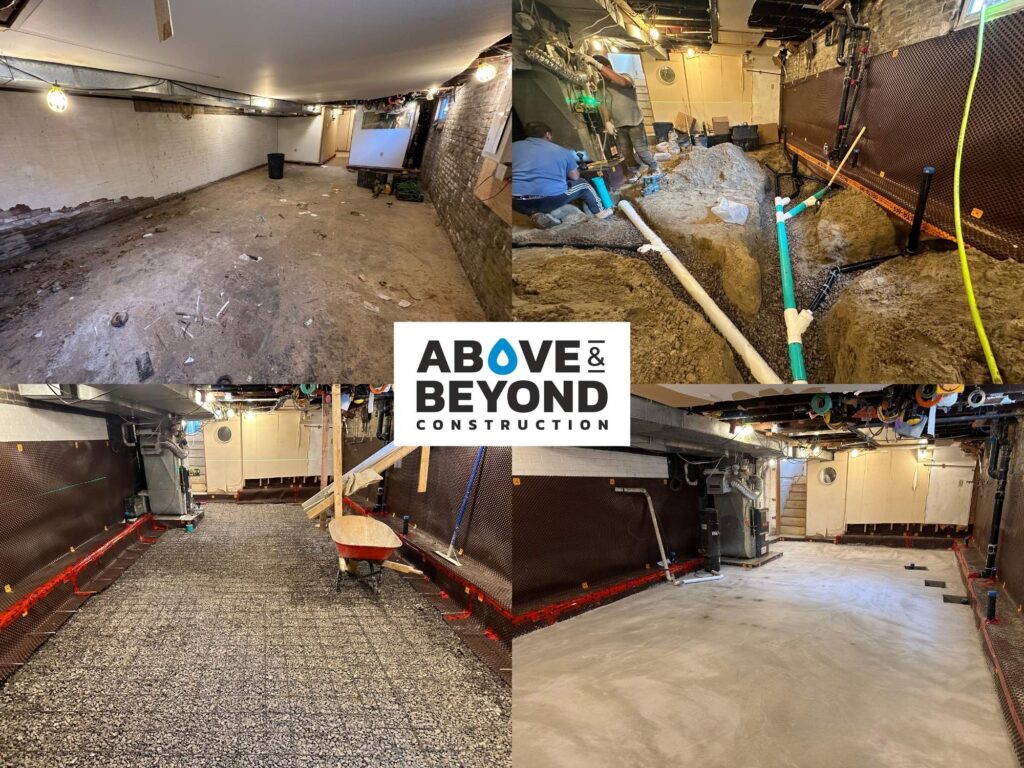
A few years back we had a project in the East End of Toronto that drilled this into us. The homeowner wanted to replace the old basement slab and hopefully gain some headroom. The ceiling height measured decent in the middle of the basement, and they were hoping to lower the floor by a few inches. As usual, we explained the realistic range: with concrete floor replacement in Toronto you can sometimes lower the basement floor anywhere from about 1 inch up to about 6 inches, depending on conditions.
That last part matters. “Depending on conditions” is not a throwaway line. It is the entire job.
Once we started, we did what we always do first on concrete floor replacement in Toronto projects. We broke the concrete at several corners and key points, exposed enough to see slab thickness and base material, and shot elevations using a laser. That is when the problem showed up.
The footings were uneven.
When we measured from the laser beam down to the footing, we saw differences of 2 to 4 inches from one corner to another. In the middle of the basement, the original slab was poured slightly lower than it was near the foundation walls. So even though the ceiling height looked good in the center, the footing elevation near the walls told a very different story.
Here is the catch most homeowners do not realize: if the footings are uneven and you try to pour a perfectly level new slab without addressing them, you can lose ceiling height instead of gaining it. You simply cannot lower the slab past the highest point of the footing without compromising structural safety. That highest footing point becomes your hard stop unless you change the structure.
This is exactly where many people confuse concrete floor replacement in Toronto with basement foundation replacement. A slab replacement is not automatically a basement foundation replacement. You can replace the slab without touching the foundation. But if you want true headroom and the footing elevations block you, then you are no longer talking about a basic slab job. You are talking about basement foundation replacement scope, meaning structural changes like bench footing or underpinning, plus permits, engineering, inspections, and a much larger plan.
Basement headroom math in plain language
Your future ceiling height is not determined by one measurement in the middle of the basement. It is determined by the tightest constraints around the perimeter and above your walking path. Typical constraints include the highest footing point around the perimeter, drain and sewer elevations, and mechanical obstructions above like beams, ducts, and bulkheads. Even if you excavate deeper, you still have to rebuild the base under the slab. Gravel, optional insulation, vapor barrier, and slab thickness all take up depth. That is why a promise of “6 inches down” is meaningless until you measure the structure and confirm the system build up.
In that East End basement, to truly gain headroom, the only realistic options were bench footing or underpinning. Both are structural. Both expand the job from concrete floor replacement in Toronto into basement foundation replacement territory.
Bench footing is a method where you lower the floor in the center area but leave a raised concrete bench around the perimeter along the foundation walls. That bench becomes the structural transition so you do not excavate under the existing footings. Bench footing often reduces complexity and cost compared to underpinning, but you lose usable floor space along the walls. Your future framing, storage, and room layout must be designed around that bench, otherwise the basement feels smaller than expected.
Underpinning is the full commitment option. It extends the existing foundation deeper by excavating in controlled sections beneath the footings, then pouring new concrete to transfer loads to the new depth. It is slower and more complex, but it preserves floor area and typically achieves greater headroom. Underpinning is not “extra digging.” It is structural staging. This is why underpinning is treated as basement foundation replacement work, not just concrete floor replacement in Toronto.
Here are the questions we get all the time during quotes for concrete floor replacement in Toronto, and the honest answers.
Can you lower my basement floor 6 inches without changing the foundation
Sometimes, but only if the footing elevations, slab profile, and drainage elevations allow it. If the highest footing point blocks the depth you want, then the job moves into basement foundation replacement scope.
Why did my ceiling height look fine in the center?
Because slabs are not always poured level, and the perimeter near the walls is where footing elevations control what is safe. The middle can fool you.
If footings are uneven, can you pour the slab following the uneven shape
You can, but then you trade a flat floor for headroom. Most homeowners want a level finished floor, which forces the slab to level out. That is when the highest footing point becomes the limiting factor.
Is bench footing worse than underpinning when doing concrete floor replacement in Toronto?
Not automatically. Bench footing is often cheaper and faster. Underpinning preserves floor area and usually gains more headroom. The right choice depends on layout goals, budget, and what the structure allows. Both are basement foundation replacement style decisions, not a simple concrete floor replacement in Toronto decision.
That East End sandstone basement was a great example of why the site visit matters. If we had quoted it blindly, everyone would have been unhappy once the concrete was already broken. In Toronto, the ground truth is under the slab. If you want real headroom, you need real elevations, not guesses.
Part 2 coming soon, where we will cover everything from drain and sump pump installation to basement waterproofing in Toronto.